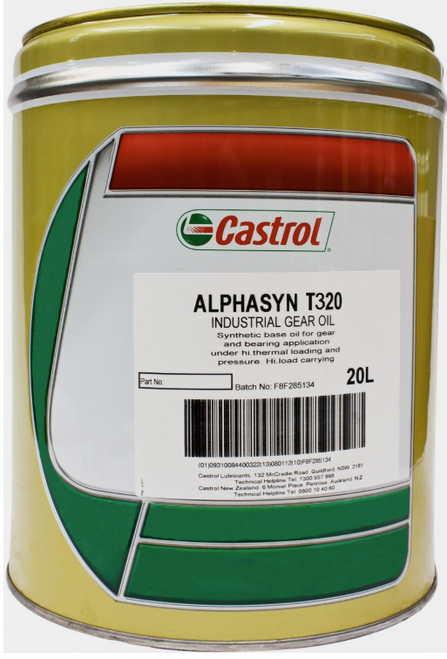


Description
Castrol Alphasyn™ T 460
Product Description
Castrol Alphasyn™ T 460 is a premium synthetic industrial gear lubricant formulated with Polyalphaolefin (PAO) base oils and advanced sulphur/phosphorus anti-wear technology. It is designed for enclosed gear systems, bearings, circulating systems, and other industrial applications operating under light to medium loads and elevated temperatures. The product provides excellent thermal stability, oxidation resistance, and long service life.
Key Features & Benefits
- Synthetic PAO technology for extended lubricant life
- Excellent thermal and oxidation stability
- High viscosity index for reliable performance across a wide temperature range
- Good load-carrying and anti-wear properties
- Excellent low-temperature fluidity
- Effective water separation characteristics
- Compatible with nitrile, silicone, and fluoropolymer seals
- Suitable for high-temperature industrial applications
Typical Applications
- Enclosed industrial gearboxes
- Bearings and circulating lubrication systems
- Hydraulic systems operating at elevated temperatures
- Large, slow-moving gears
- Industrial equipment requiring ISO VG 460 synthetic gear oil
Not recommended for heavily shock-loaded gear systems.
Specifications
- DIN 51517 Part 2 (CL)
- David Brown Type A
Typical Physical Characteristics
| Property | Method | Value |
|---|---|---|
| ISO Viscosity Grade | - | 460 |
| Density @ 15°C | ASTM D4052 | 870 kg/m³ |
| Kinematic Viscosity @ 40°C | ASTM D445 | 460 mm²/s |
| Kinematic Viscosity @ 100°C | ASTM D445 | 41.8 mm²/s |
| Viscosity Index | ASTM D2270 | 141 |
| Pour Point | ASTM D97 | -30°C |
| Flash Point (COC) | ASTM D92 | 285°C |
| Foam Sequence I | ASTM D892 | 20/0 ml/ml |
| Rust Test (Synthetic Seawater) | ASTM D665B | Pass |
| FZG Gear Scuffing Test | ISO 14635-1 | Failure Load |
Storage & Handling
Store in a clean, dry area away from direct sunlight. Keep containers tightly closed when not in use. Avoid contamination from water, dust, and other lubricants.
Health & Safety
Refer to the latest Safety Data Sheet (SDS) before use. Follow standard industrial hygiene and handling practices.